“For decades, the standard advice given to motorists in India was to 'never get involved' in a roadside accident. The fear of endless police interrogations, being framed under Section 304A IPC for negligent death, spending years attending magistrate court hearings, and being extorted by private hospitals for admission deposits paralyzed potential lifesavers. Today, that legal reality has been completely overturned. The Supreme Court of India and Parliament have codified ironclad protections for Good Samaritans. This guide details every single legal right, boundary, and protocol you possess as a roadside helper.”
1. The Historic Crisis: The Bystander Effect and Police Fear in India
India bears the tragic distinction of accounting for roughly 11% of all global road accident fatalities, despite possessing only 1% of the world's vehicular fleet. According to the Law Commission of India's 201st Report, over 50% of accident victims who succumbed to their injuries could have been saved if they had received basic first aid and medical care within the first 60 minutes—the 'Golden Hour'.
Yet, a nationwide study conducted by the SaveLIFE Foundation revealed that 84% of Indians were unwilling to assist an injured person on the road. The primary reasons cited were: fear of police harassment (88%), fear of being detained at the hospital (77%), and fear of becoming entangled as a prosecution witness in protracted legal proceedings (88%).
Recognizing this systemic crisis as a violation of the Right to Life under Article 21 of the Constitution, the Supreme Court of India delivered a historic judgment in *SaveLIFE Foundation & Anr. v. Union of India (2016)*, directing the Union Government to formulate legally enforceable guidelines protecting Good Samaritans. These directives were subsequently codified into statutory law by Parliament.
2. Section 134A Motor Vehicles Act: The Statutory Immunity Framework
The centerpiece of bystander protection is Section 134A of the Motor Vehicles (Amendment) Act 2019, which entered into force across all states and Union Territories. The statute provides:
'A Good Samaritan shall not be liable for any civil or criminal action for any injury to or death of the victim of an accident observed by them or while assisting them, resulting from their negligence or omission in rendering emergency medical or non-medical care or assistance.'
The definition of a 'Good Samaritan' covers any individual who voluntarily steps forward to administer first aid, arrange transport, alert emergency services, or assist a victim in good faith. The protection applies universally on highways, municipal roads, and rural corridors.
3. Police Investigation Boundaries: Explicit DOs and DON'Ts
Under the Central Motor Vehicles (Protection of Good Samaritans) Rules 2020 issued by the Ministry of Road Transport and Highways (MoRTH Gazette S.O. 3321(E)), state police forces are bound by strict operating boundaries. Defaulting officers face disciplinary departmental inquiries and criminal contempt proceedings.
| Investigation Area | Strict Legal Prohibition (What Police Cannot Do) | Good Samaritan's Protected Right |
|---|---|---|
| Personal Identification | Cannot demand name, phone number, address, or proof of identity | Absolute right to remain completely anonymous when reporting or assisting |
| Police Station Summons | Cannot compel the helper to visit the police station or outpost | Examination must occur at helper's residence/office if they agree to speak |
| Witness Examination | Cannot conduct repeated interrogations or multi-day questioning | Strict single-sitting examination; video conferencing/virtual deposition permitted |
| Police Officer Attire | Investigating officers cannot appear in official police uniform | Examining officer must be dressed in civilian / plain clothes to prevent social stigma |
| FIR / Case Registration | Cannot name the Good Samaritan as an accused or co-accused | Immunity from inclusion in FIRs under BNS 106 (former IPC 304A) |
| Detention / Questioning | Cannot detain helper under pretext of recording statements | Helper is free to leave the moment hospital or police assume incident custody |
4. Hospital Admission Mandate & Medico-Legal Case (MLC) Protocol
Historically, private nursing homes and hospitals routinely turned away trauma victims at the gate, citing 'this is a police Medico-Legal Case (MLC) and we don't have forensic clearance.' This practice is now explicitly illegal.
Under Section 357C of the Code of Criminal Procedure (retained as Section 396 in the Bharatiya Nagarik Suraksha Sanhita - BNSS), ALL hospitals, whether run by the Central Government, State Government, local bodies, or private commercial trusts, are mandated to provide immediate first aid and medical stabilization free of charge to victims of road accidents.
- No Pre-Admission Financial Deposit: A hospital cannot demand advance payment, registration fees, or admission deposits before admitting an emergency victim.
- No Blood/Medicine Purchase Mandate: The hospital cannot force the Good Samaritan to purchase blood units, surgical consumables, or emergency medications.
- Immediate Release of Helper: The Good Samaritan is legally entitled to leave immediately after handing over the patient to the casualty ward. The hospital cannot detain the helper for administrative billing or police arrival.
- Charter Display Obligation: Every hospital in India is legally required to display a prominent Good Samaritan Charter in English, Hindi, and the local state language at its emergency entrance.
5. Cash Rewards & State Recognition: The MoRTH Incentive Scheme
To actively encourage citizens to rescue accident victims, MoRTH operationalized the 'Scheme for Financial Assistance to Good Samaritans'. The scheme provides tangible monetary incentives and state recognition:
- Immediate Cash Grant: Any Good Samaritan who rescues an accident victim involving serious trauma and transports them to a hospital within the Golden Hour receives a cash reward of ₹5,000 per incident.
- Certificate of Appreciation: Along with the financial reward, the District Magistrate (DM) issues an official government Certificate of Appreciation.
- Multiple Incidents: A helper can receive the ₹5,000 award up to five times in a single calendar year.
- National Annual Awards: The Ministry selects the top 10 Good Samaritans across India each year, conferring a national award of ₹1,00,000 each, presented by the Minister of Road Transport & Highways.
6. The VaahanSafe QR Shield: Bridging Emergency Contact Without PII Exposure
Even with complete legal immunity, bystanders often face friction when attempting to notify the victim's family. Searching through an unconscious driver's pockets, unlocking phones, or dialing arbitrary contacts can invite uncomfortable accusations of theft or invasion of privacy.
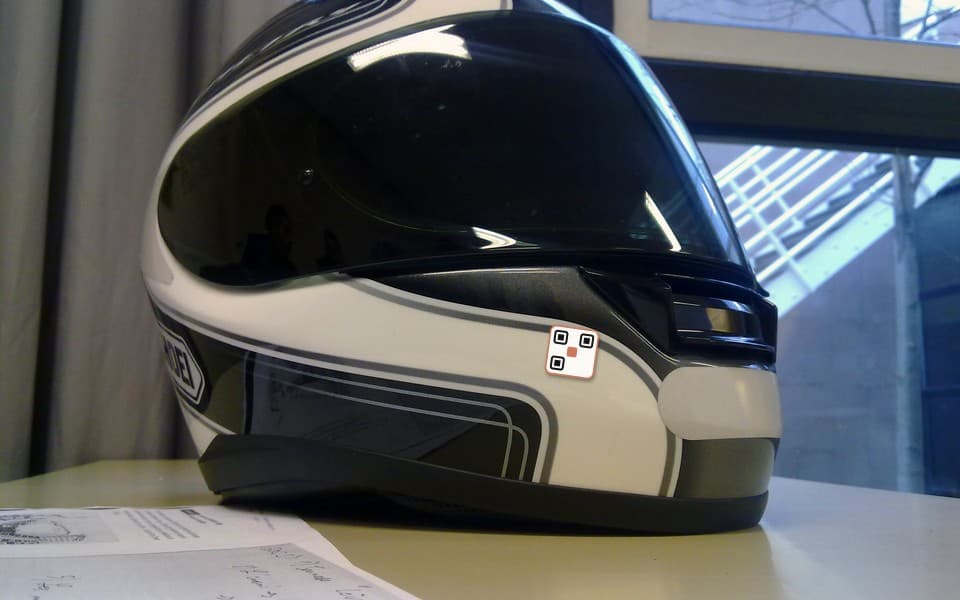
VaahanSafe resolves this through an optical identity bridge. By affixing an opaque QR sticker to the passenger-side quarter glass, the vehicle itself becomes the contact channel:
- Zero-Exposure Call Routing: When the Good Samaritan scans the decal, they tap 'Call Emergency Contact'. The call routes through an encrypted virtual proxy. The Good Samaritan's phone number is never revealed to the family, and the owner's personal number is never revealed to the helper.
- Vital Medical Identifiers: The public safety view immediately displays pre-authorized emergency data—such as Blood Group, Diabetic Status, and Critical Allergies—allowing casualty doctors to begin treatment without waiting for lab cross-matching.
- No Application Dependency: The helper does not need to install an app or register an account. Standard iOS and Android camera apps resolve the safety view in milliseconds.
What happens if an accident victim passes away despite my immediate help?
Under Section 134A(1) of the Motor Vehicles Act, you have absolute statutory immunity. You cannot be subjected to civil litigation for medical consequences or criminal prosecution for unintentional death resulting from your bona fide rescue efforts. The law explicitly protects you from liability.
Can a hospital ask me to pay for blood or ICU admission before treating the victim?
No. Under Supreme Court directives and Section 357C CrPC (now Section 396 BNSS), all hospitals in India—private or public—are legally obligated to provide immediate emergency first aid and trauma stabilization free of cost. Refusing treatment or demanding admission deposits is punishable under medical licensing cancellation and contempt of court.
Can police summon me to the police station for questioning?
No. The Central Motor Vehicles (Protection of Good Samaritans) Rules 2020 strictly forbid police from summoning Good Samaritans to police stations. If you voluntarily agree to provide a witness statement, the examination must take place at a time and location of your own convenience (such as your residence or office), in a single sitting, and by an officer dressed in plain clothes.
How do I claim the MoRTH ₹5,000 Good Samaritan reward?
When you bring a victim to the hospital casualty ward, the attending medical officer records the incident in an official Good Samaritan registry and informs the local District Level Appraisal Committee (headed by the District Magistrate). Once confirmed, the ₹5,000 award is disbursed directly into your bank account via Direct Benefit Transfer (DBT).
- Section 134A, Motor Vehicles (Amendment) Act 2019 — Protection of Good SamaritansSource: indiacode.nic.in
Statutory immunity from civil and criminal liability for roadside emergency helpers
- Supreme Court Guidelines on Good Samaritans (WP (Civil) No. 235/2012, SaveLIFE Foundation v. Union of India)Source: main.sci.gov.in
Constitutional Article 21 mandate establishing standard operating procedures for police and hospitals
- Ministry of Road Transport and Highways (MoRTH) Gazette Notification S.O. 3321(E) — Good Samaritan Rules 2020Source: morth.nic.in
Standard operating procedures binding on state police forces regarding witness examination and anonymity
- Section 357C Code of Criminal Procedure 1973 / Section 396 Bharatiya Nagarik Suraksha Sanhita 2023Source: indiacode.nic.in
Mandatory free emergency first aid and medical stabilization at all private and public hospitals
- MoRTH Scheme for Financial Assistance to Good Samaritans (Order No. RT-25035/101/2014-RS)Source: morth.nic.in
Operational guidelines for the ₹5,000 cash grant and annual National Good Samaritan awards
Canonical reference guidelines and regulatory specifications under VaahanSafe Documents.
Learn how the vehicle safety identity works.
Industrial UV-cured optical decals connecting bystanders directly to your emergency contacts without exposing private phone numbers or home addresses.
The Roadside Bystander Action Chain: First Steps at a Highway Incident
A pin-to-pin operational protocol for the critical first 15 minutes at an Indian highway accident: perimeter safety, optical QR relays, emergency dispatch, and cervical stabilization.
How Emergency Contacts Receive and Respond to Decal Relays
A technical walkthrough of how VaahanSafe's serverless notification engine executes automated fallback cascades across VoIP, WhatsApp, and SMS during roadside emergencies.